
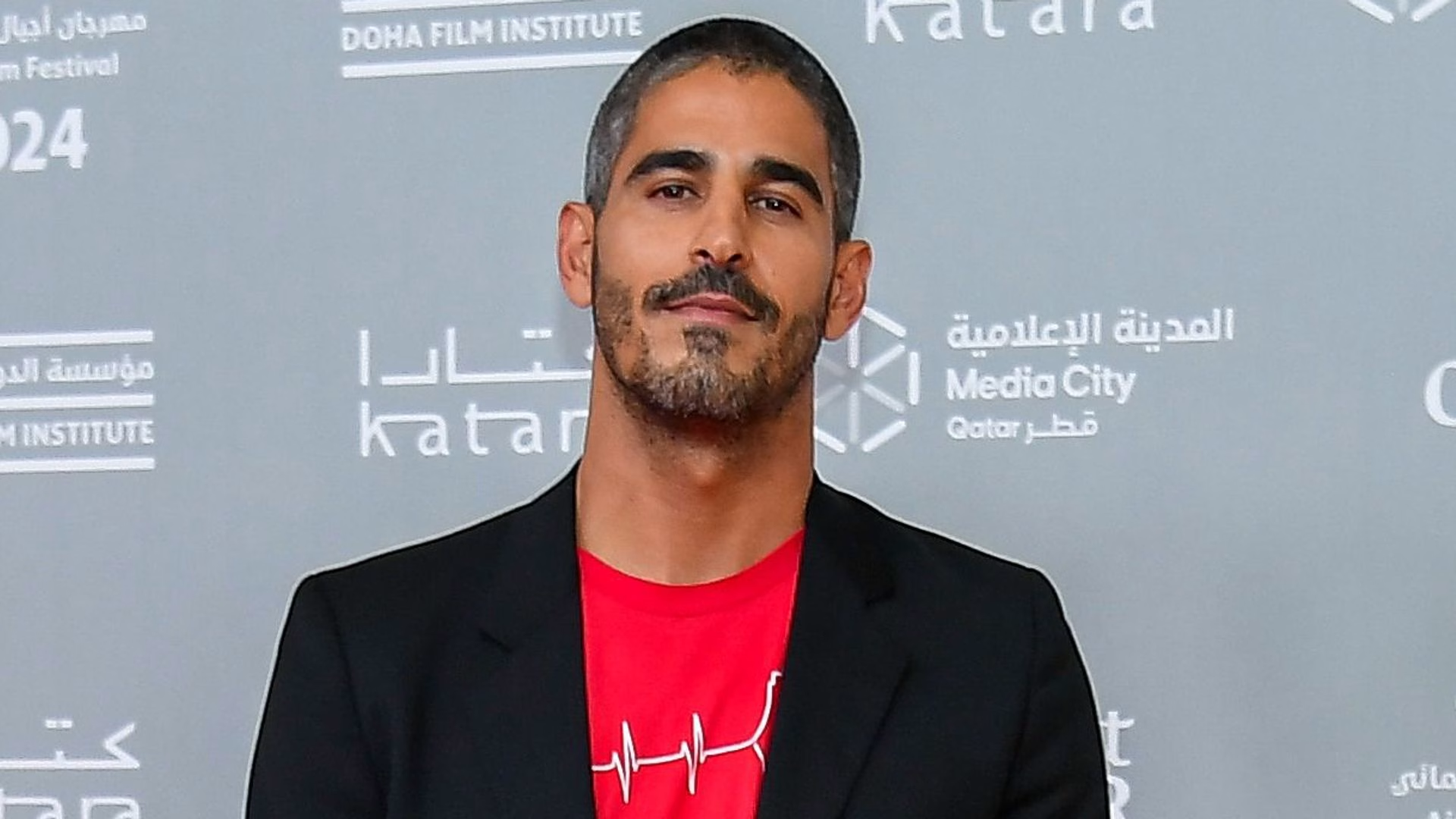
Journalist Freed After Posting Iran War Videos Amidst Ongoing Debate on Press Freedom
A journalist who was detained in Kuwait after posting videos related to the Iran war has been released from custody, raising questions about press freedom and censorship in the region. The journalist’s release comes as a significant development in the ongoing debate about the limits of free speech and the role of the media in reporting on sensitive topics.
The journalist, whose identity has not been disclosed, was arrested in Kuwait after posting videos on social media that were critical of the Iranian government’s actions in the ongoing war. The videos, which showed footage of the conflict, were widely shared online and sparked a heated debate about the role of the media in reporting on sensitive topics.
The journalist’s detention was met with widespread condemnation from press freedom advocates and human rights organizations, who argued that the arrest was a clear example of censorship and a threat to free speech. The incident highlighted the fragile state of press freedom in the region, where journalists often face harassment, intimidation, and even imprisonment for reporting on sensitive topics.
The release of the journalist is seen as a significant victory for press freedom advocates, who had been calling for the journalist’s release. However, the incident has also raised questions about the limits of free speech and the role of the media in reporting on sensitive topics. As the debate continues to unfold, it remains to be seen whether the journalist’s release will have a lasting impact on the region’s press freedom landscape.
Context: The Ongoing Debate on Press Freedom in the Region
The region has a long history of censorship and press freedom abuses, with journalists often facing harassment, intimidation, and imprisonment for reporting on sensitive topics. The Iranian government has been accused of cracking down on press freedom, with numerous journalists and bloggers facing arrest and imprisonment for their reporting.
In 2019, the Iranian government passed a law that granted the judiciary the power to block websites and social media accounts that were deemed to be “propaganda” against the government. The law was widely criticized by press freedom advocates, who argued that it was a clear example of censorship and a threat to free speech.
The Kuwaiti government has also faced criticism for its treatment of journalists and bloggers, with several cases of harassment and intimidation reported in recent years. The release of the journalist is seen as a significant development in the ongoing debate about press freedom in the region, and raises hopes that the government will take steps to protect the rights of journalists and bloggers.
Analysis: The Implications of the Journalist’s Release
The release of the journalist has significant implications for the region’s press freedom landscape. The incident highlights the importance of protecting the rights of journalists and bloggers, and the need for governments to respect the principles of free speech and press freedom.
The journalist’s release also raises questions about the role of social media in reporting on sensitive topics. The use of social media to share videos and information about the conflict has been a key factor in the ongoing debate about press freedom and censorship in the region.
As the debate continues to unfold, it remains to be seen whether the journalist’s release will have a lasting impact on the region’s press freedom landscape. However, one thing is clear: the incident has highlighted the importance of protecting the rights of journalists and bloggers, and the need for governments to respect the principles of free speech and press freedom.
Conclusion: A Significant Victory for Press Freedom Advocates
The release of the journalist is a significant victory for press freedom advocates, who had been calling for the journalist’s release. The incident highlights the importance of protecting the rights of journalists and bloggers, and the need for governments to respect the principles of free speech and press freedom.
As the debate continues to unfold, it remains to be seen whether the journalist’s release will have a lasting impact on the region’s press freedom landscape. However, one thing is clear: the incident has raised important questions about the limits of free speech and the role of the media in reporting on sensitive topics, and will continue to shape the ongoing debate about press freedom in the region.
Original reporting sourced from external feeds. Analyzed and rewritten by our AI Engine.



0 Comments